

About
Yelp connects people with great local businesses through user’s ratings and comments. The goal was to identify new features that would encourage users to engage with the app.
Process
The Design Thinking process was used for this project. It is effective in finding real problems so that we could focus on seamlessly useful solutions.

Empathize/Research

Research Findings
Upon doing desk research, got some better insight on the demographics
and usage of the app.
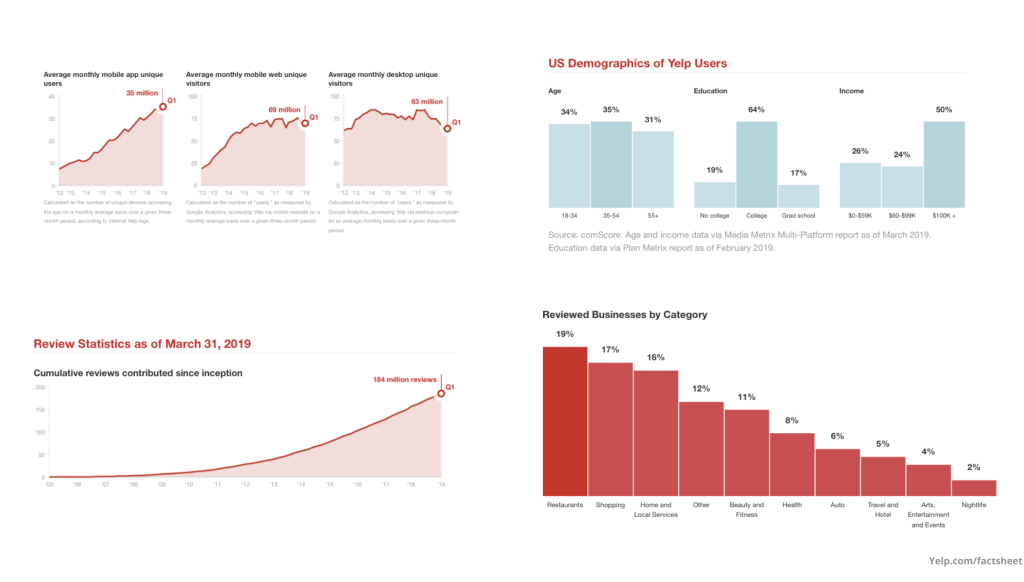
35% of users were between 35-54
65% of users were college graduates
50% of users had an income of $100k+
Hypothesis
Most users making under 100k enjoy trying new restaurants because they want to have new experiences, however, they find eating out to be too expensive.
Competitor Analysis
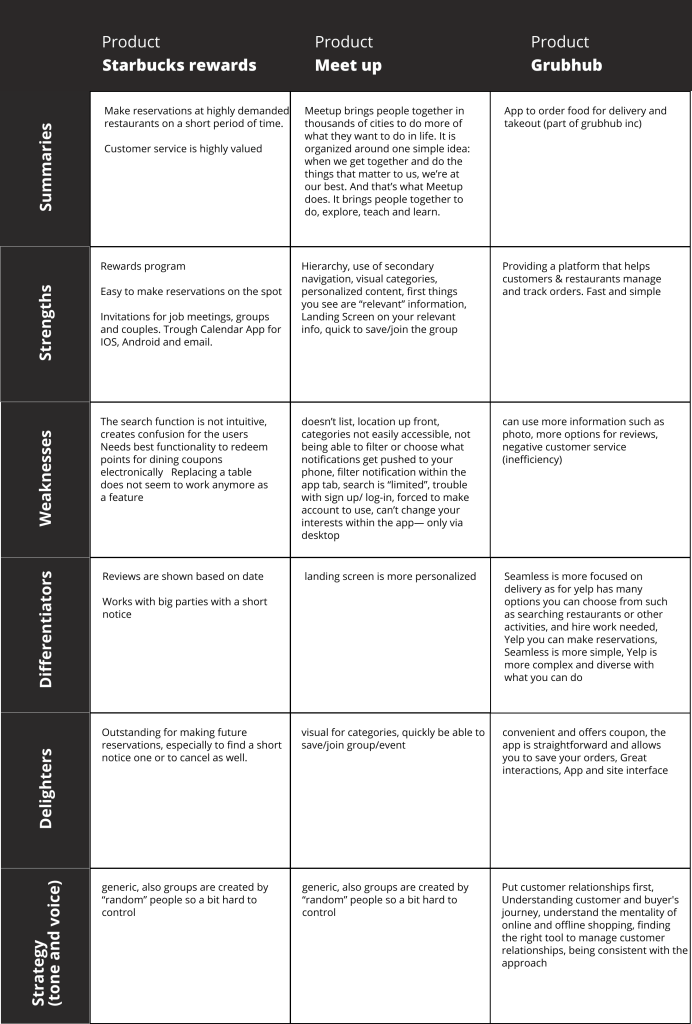
While selecting competitors, brands that encouraged group gatherings, rewards programs and take out were considered.
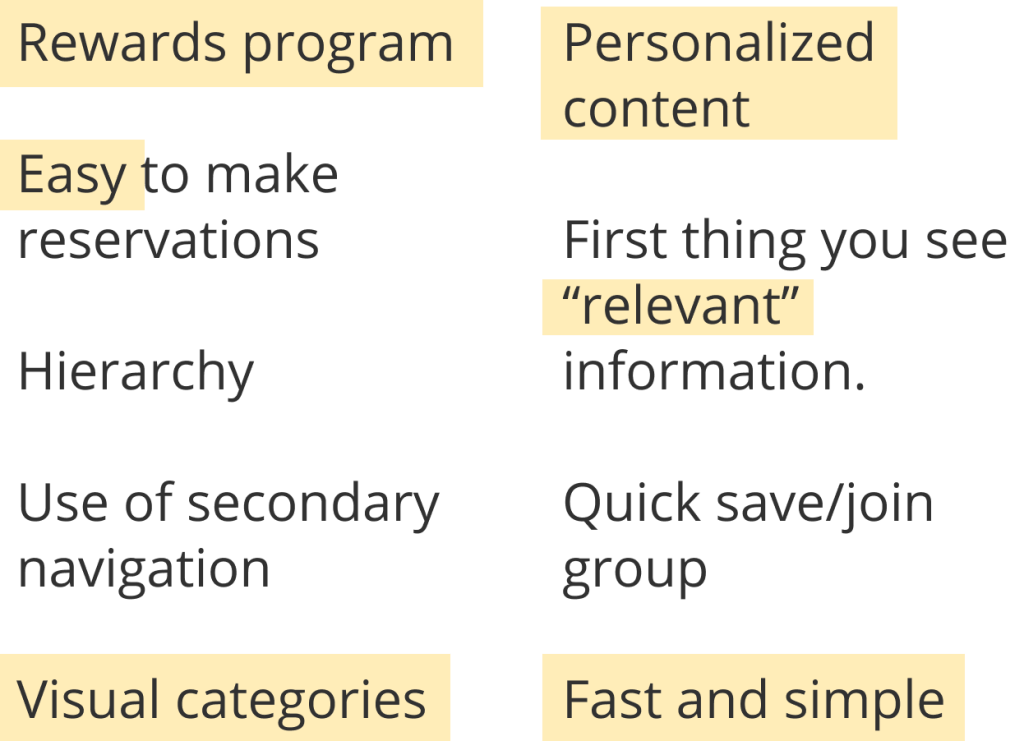
Key Takeaways
Market Segmentation
Locals (geographical) who frequently use (behavioral) the Yelp app for restaurants.
Interviews
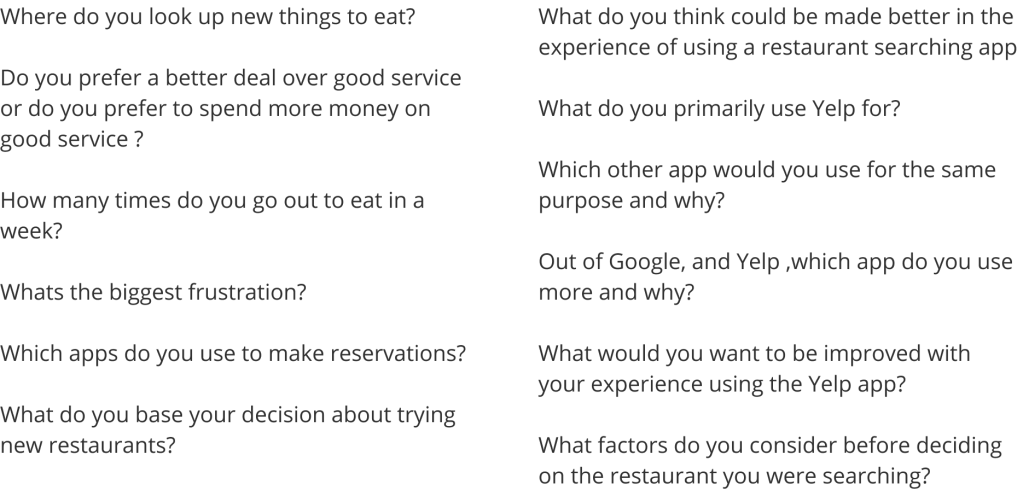
Interviews were conducted at Washington Square Park. Those interviewed were male and female, ages 22–34.
Interview Findings
People valued convenience, location, appearance and were actually willing to spend more money for a better experience. Many were frustrated in the reviews being too broad, overwhelmed with non-filtered search results and vague information.
Define

Affinity Map
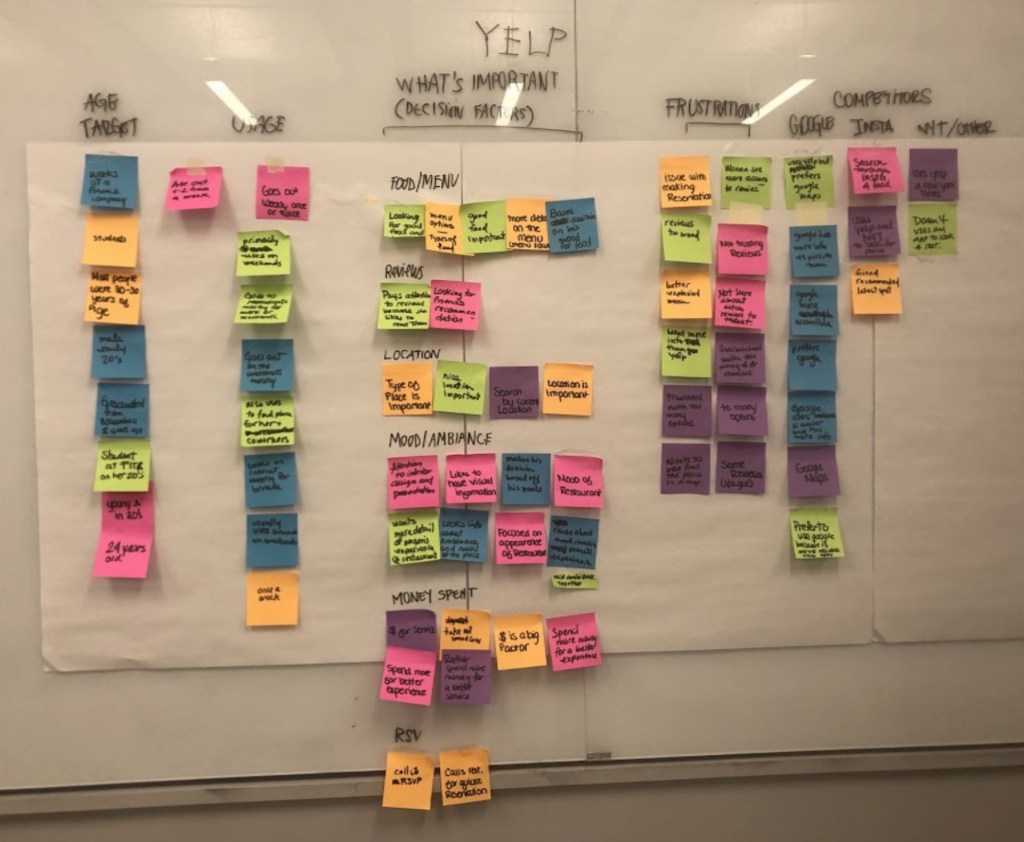
Affinity map: Emerging themes and patterns

Hypothesis REVISED
Most users making under 100k enjoy trying new restaurants because they want to have new experiences, however they find search results and features to be irrelevant and inconvenient.
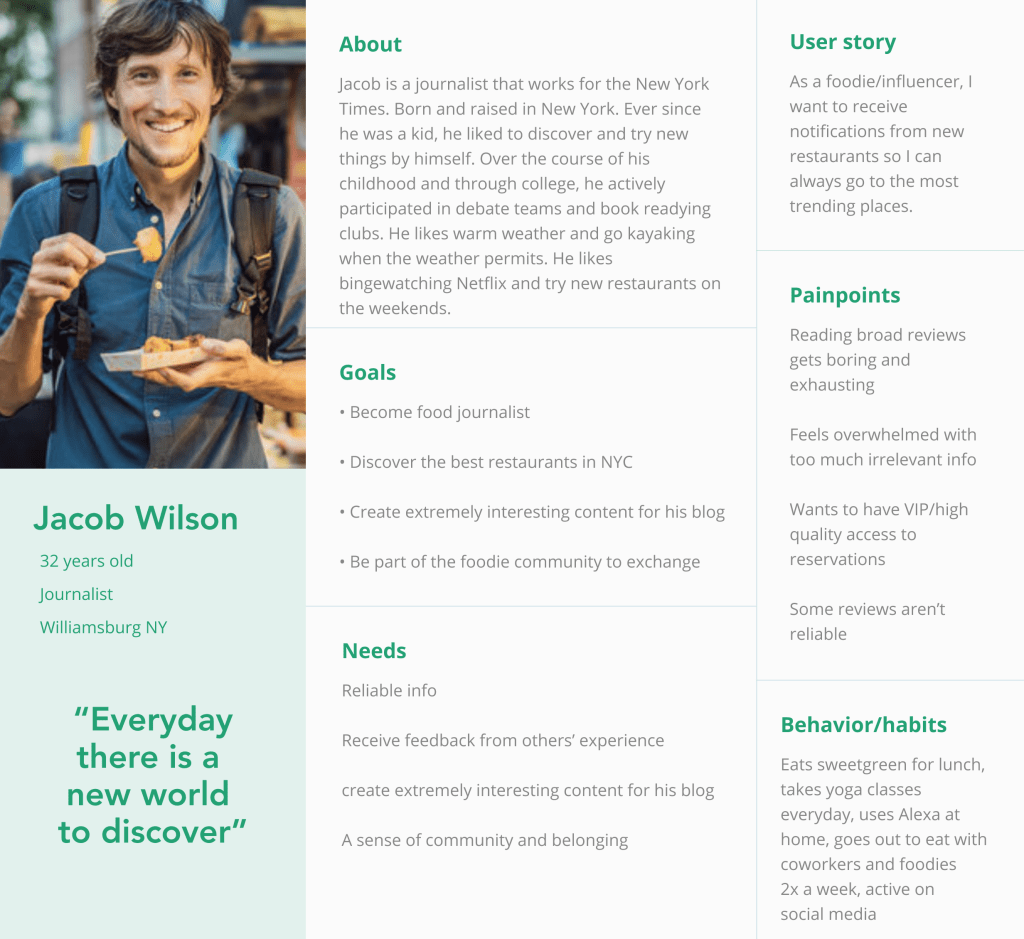
Personas
Through personas, new opportunities emerged. By immersing into each user’s experience, more pain points surfaced.

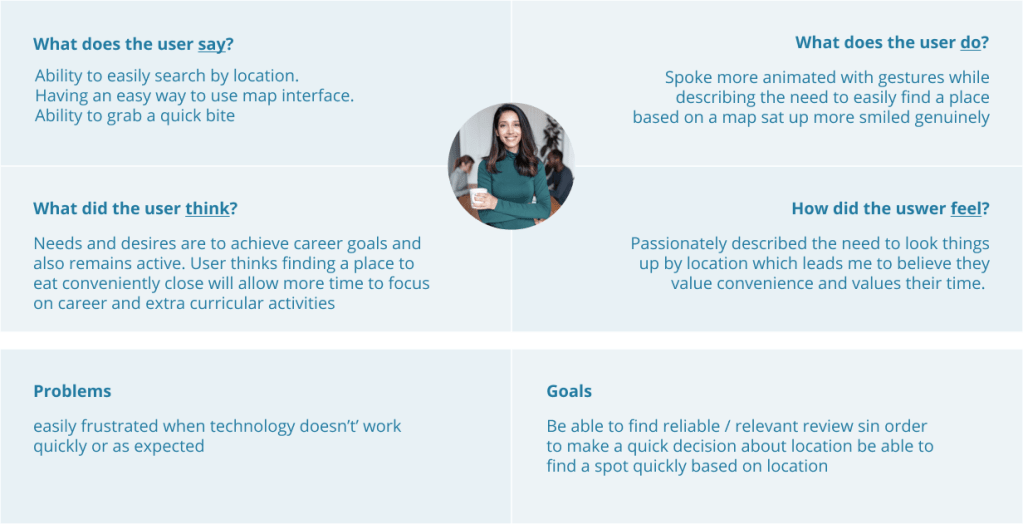
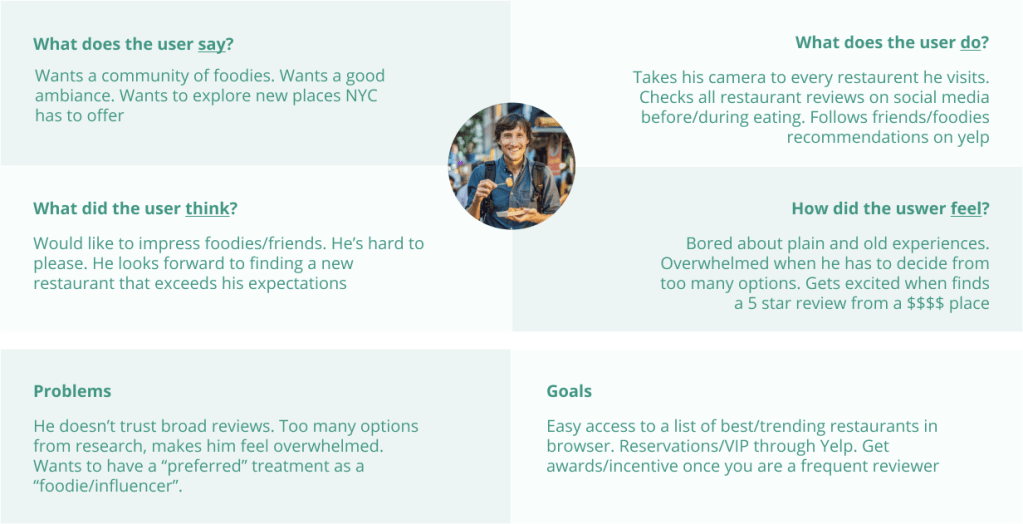
Empathy Map
By visualizing user attitudes and behaviors their needs become more evident. It’s realized that Jackie is career-oriented and values convenience. Meanwhile, Jacob is all about the experience.
User Journey Map
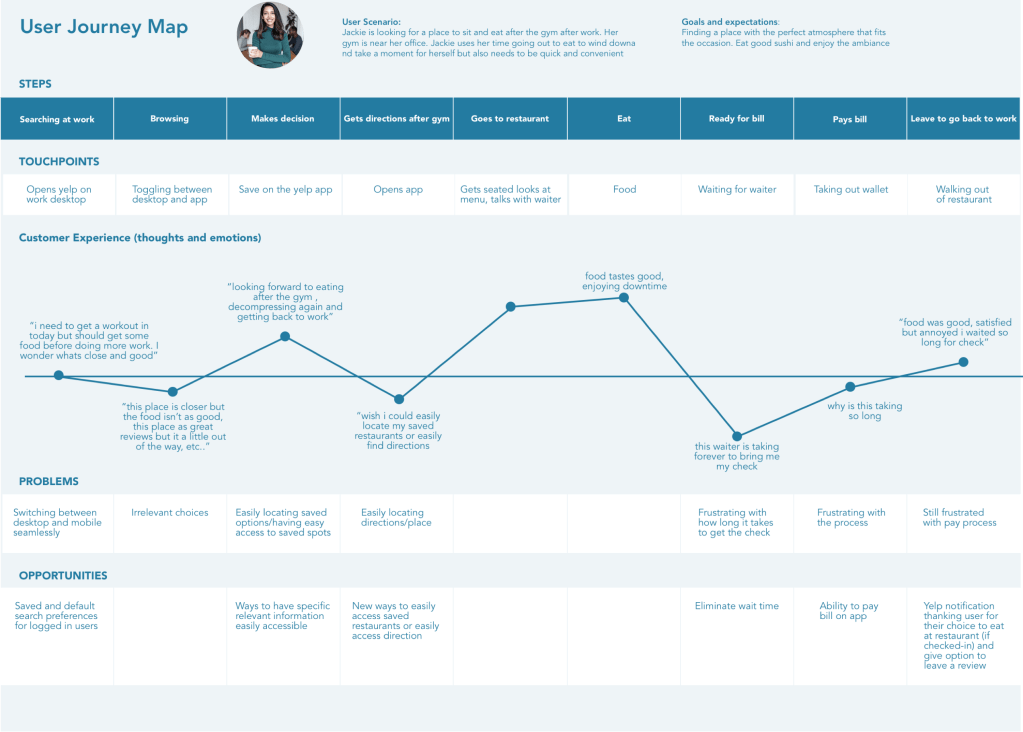
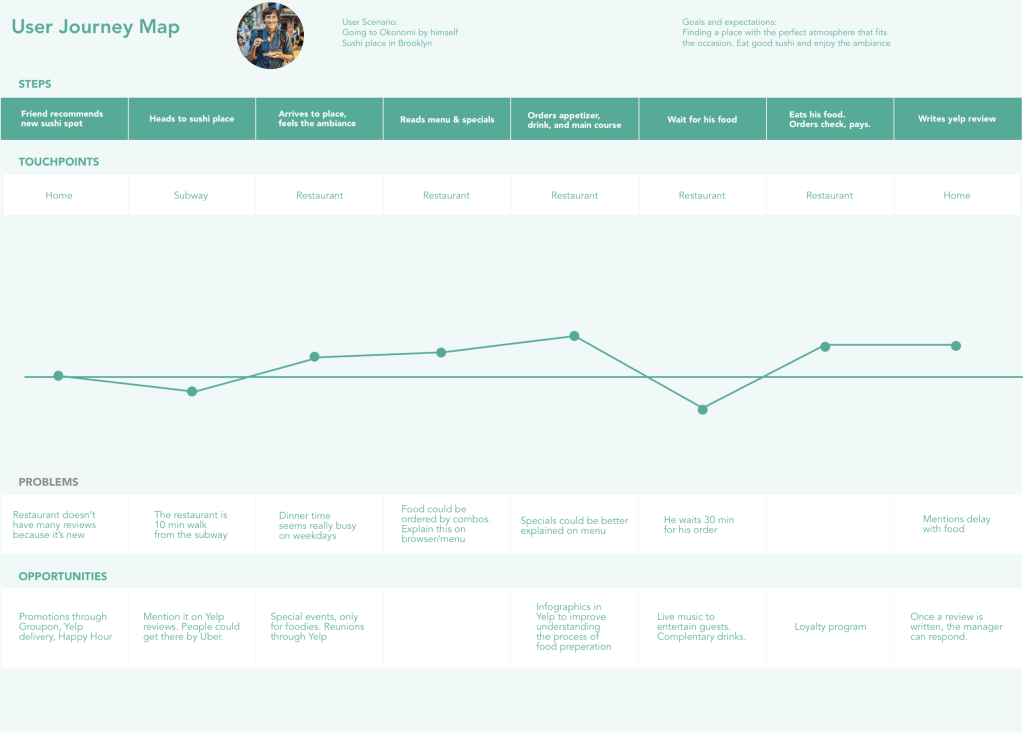
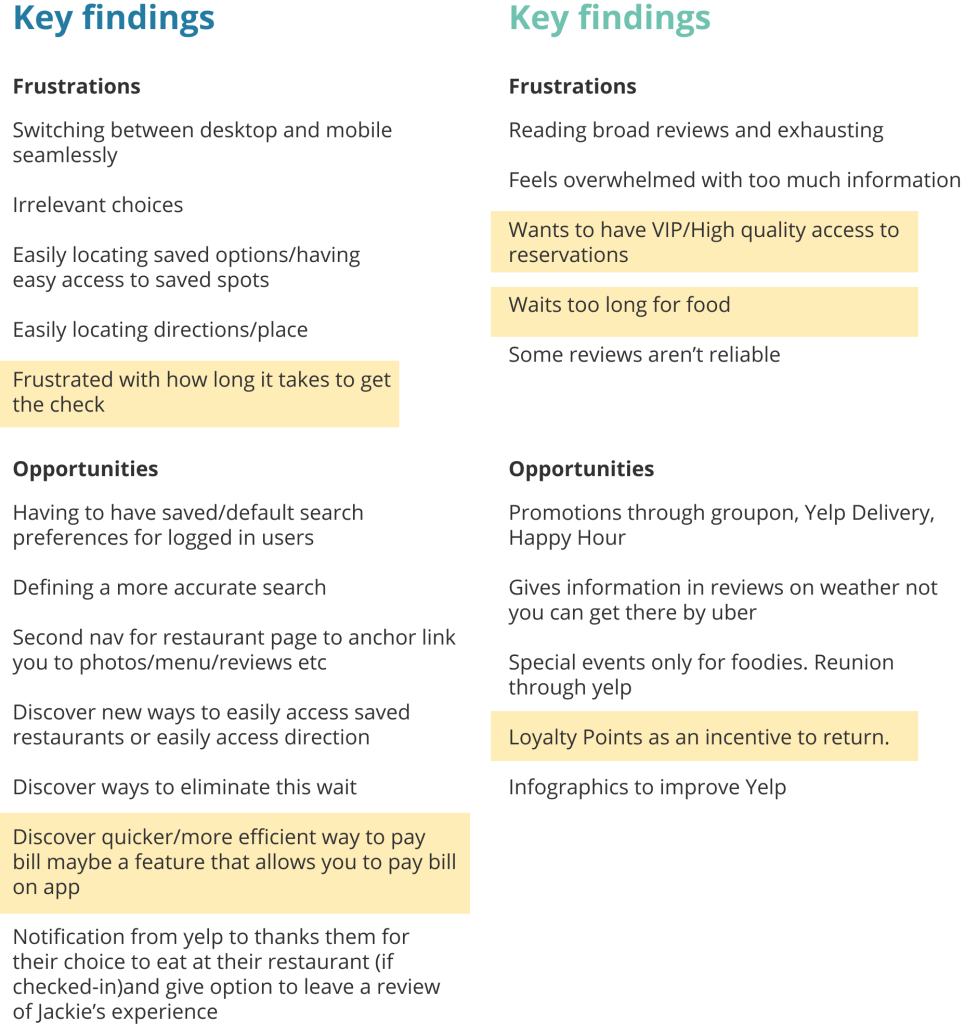
Understanding how the user using the current app more frustrations are made clear. More frustrations mean more opportunity. For Jackie, waiting for the bill is a painpoint. Whereas for Jacob, he’s looking for more promotions or coupons to support his “going out” habit.
From findings to features
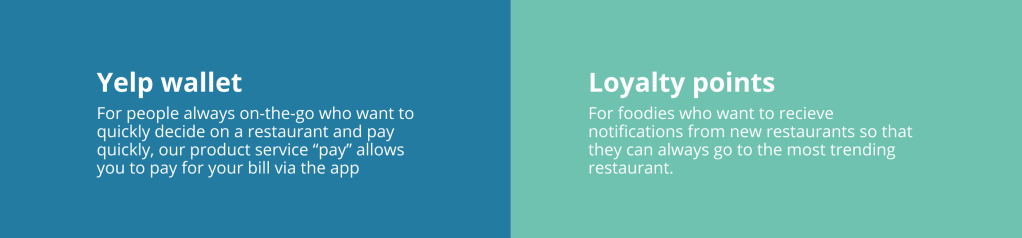
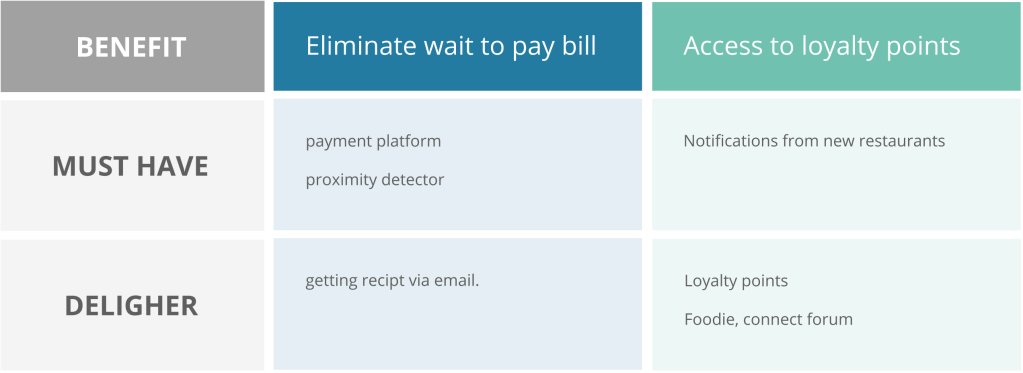
After empathizing with the user, we can establish features that will enhance the user’s experience. For Jackie, it’ll eliminate her wait time paying for the bill (Yelp Wallet). For Jacob, it will give him the VIP access he wants Loyalty Points.
Minimum Viable Product (MVP)
Now that the user’s needs have been determined, there are two new features that will prove to be beneficial to the user. One is Yelp wallet, which eliminates wait to pay bill. Second is Loyalty Points that user accumulates for redeemable points.
Sitemap
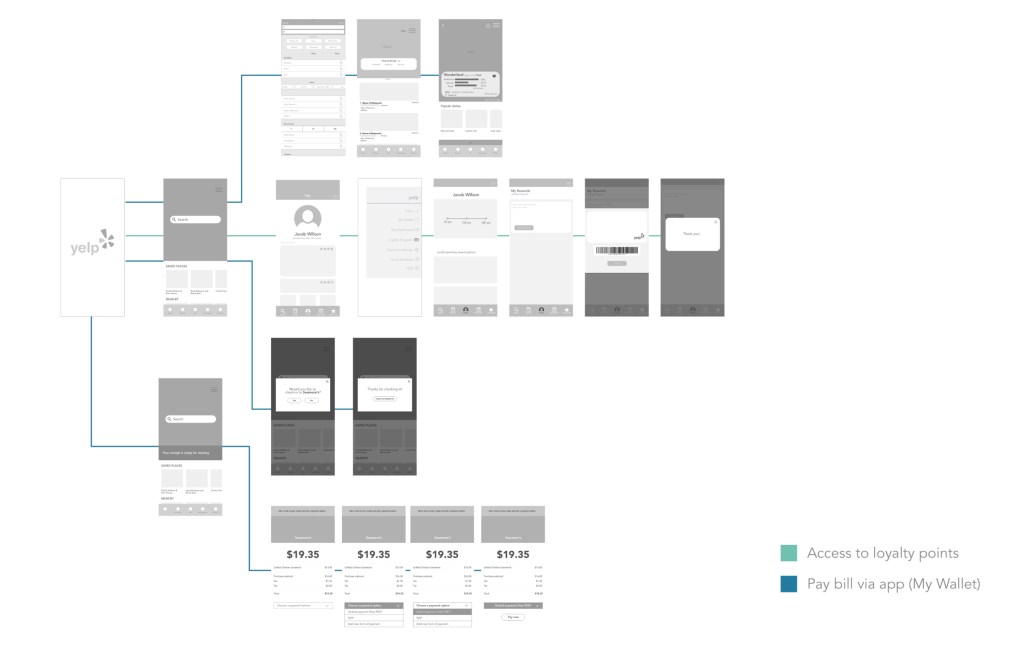
Although both features can be accessed in different ways, they are housed within the user’s profile within the navigation.

Wire Flow
Mapped out below, this is how the user can navigate to use the Yelp Wallet or redeem/view their Loyalty Points.
Task Flow
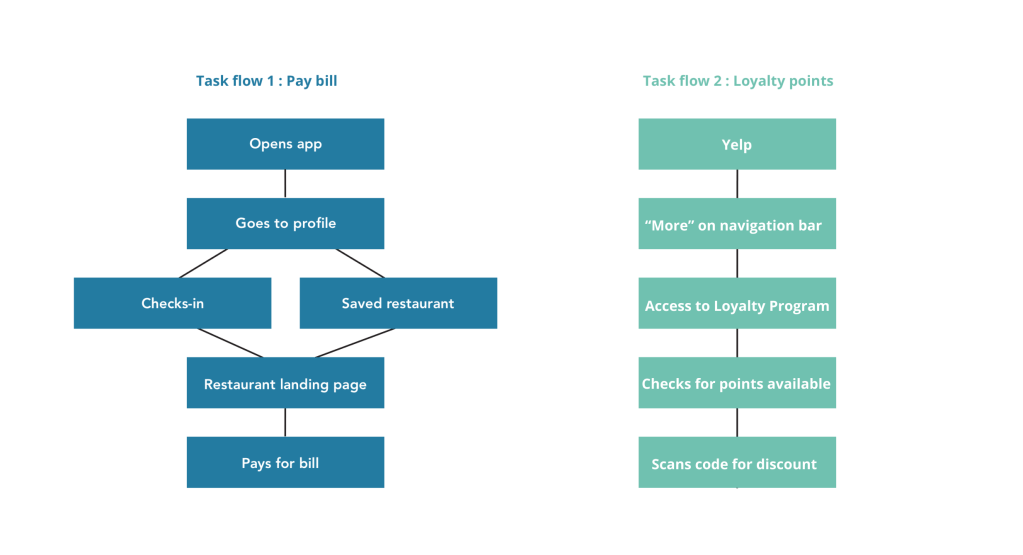
Below are single flows for the specific action at hand. Task flow 1, shows how a user pays for bill via app. Task flow 2, demonstrates how user views Loyalty Points and how to redeem.
Design/Prototyping

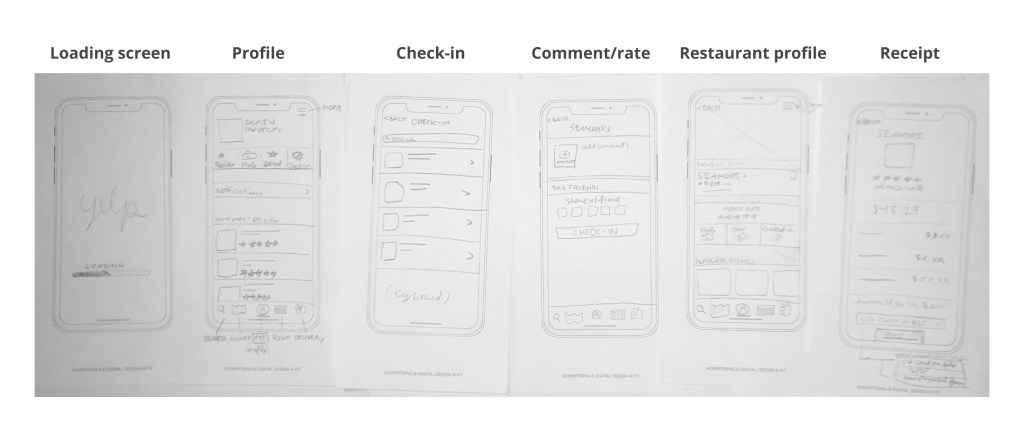
Paper Prototype
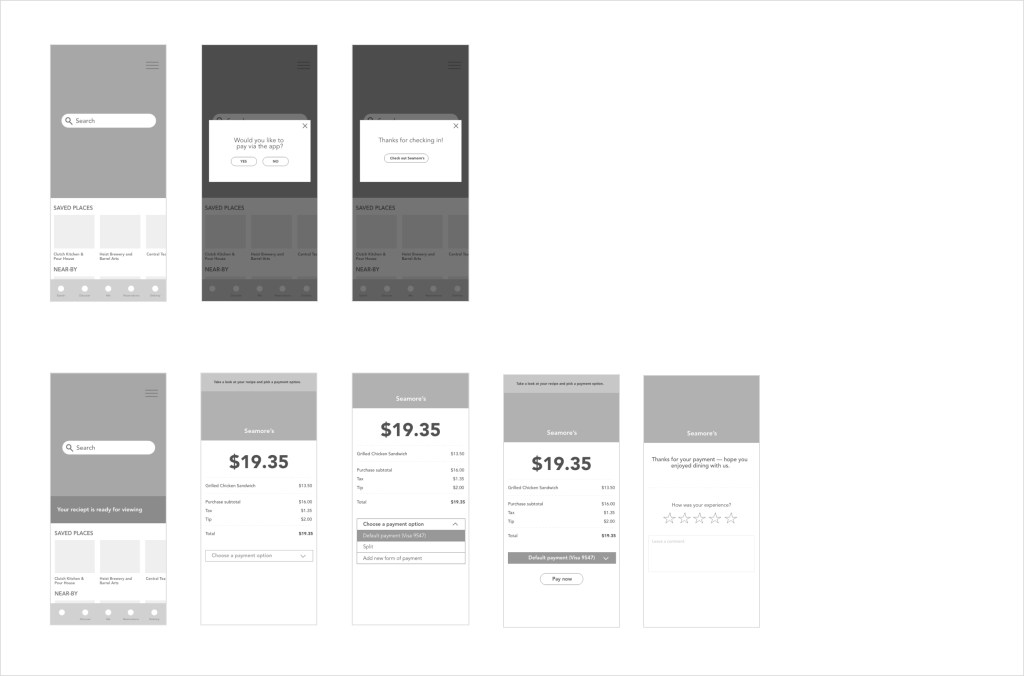
After user testing the Yelp Wallet paper prototype, it took too many steps. Instead, as the user has checked-in, the feature to be able to appear on the landing screen.
Wireframes
User flow for Yelp Wallet was updated to reflect a more seamless experience. Rather than the user navigating to their profile to view receipt, receipt will appear on landing screen when ready.
Visual Design
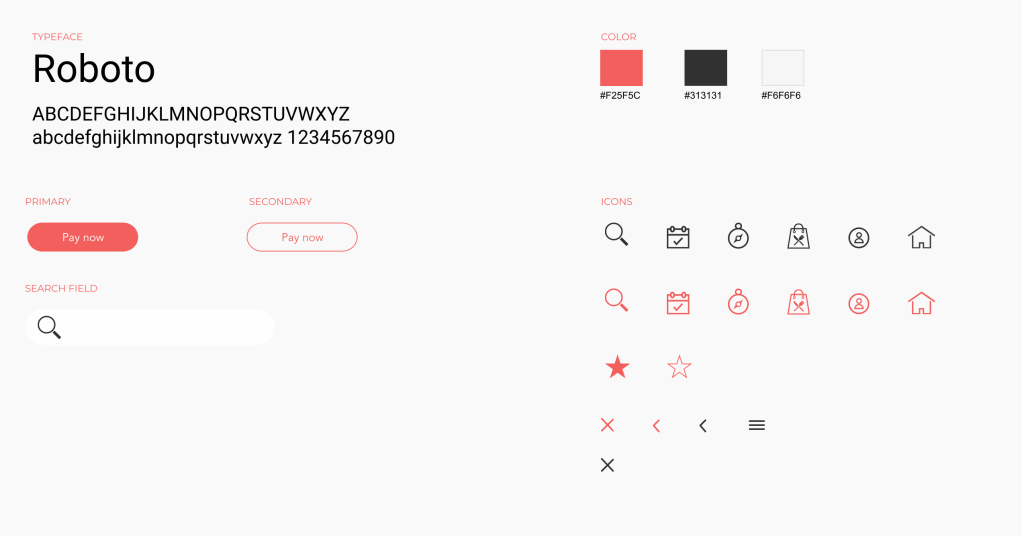
Update visual design to be more welcoming. Used a muted red to be easier on the eye. And update iconography.
Feature: Yelp Wallet
After user research, a pain point is how long a rushed user waits for the bill. Yelp Wallet allows users to pay without waiting for the physical bill.

Check-in
Through geolocation, when the user opens the app they will get a pop up that allows them to check-in to the restaurant. Once checked in the restaurant is able to share bills with the user.
Viewing Receipt
Once a bill is ready, the user opens up and sees notification. The user is then able to view the bill.


Payment
Upon seeing bill user completes payment by adding tip and selecting payment.
Feature: Loyalty Points
In an attempt for users to engage more with the app, Loyalty Points will reward users for frequent dinning that can be applied towards a bill at participating restaurants.

Navigate to points
To navigate to the Loyalty Points, user taps on the More tab on the nav.
Loyalty Points
Here the user sees their Loyalty Points balance. Selects how many points they want to use towards the bill. Once applied, coupon generates. Server applies to bill.

Final Thoughts
Exploring new features for the Yelp app was an exciting yet daunting task. It’s easy to get overwhelmed by the possibilities. From improving existing features to creating something new and out of the box. I learned that the app as a whole does not need to be fully redesigned in order to be successful but rather that small improvements can make a big difference in the user’s experience. It was also interesting to see how much through the process and empathizing with the user’s journey.

 Raquel Cruz